Sunday, May 20, 2012

The Avengers


The Avengers (4/5)


            Well, it’s finally here.  Many of us have been waiting for this moment for years, some for even decades.  But despite the bumps along the ways, and fears that we may never see its realization, us fans finally have what we have wanted for so long.  I’m talking, of course, about Joss Whedon’s first time helming an existing property in a major motion picture.  As much as Whedon fans have enjoyed his original work over the years, many of us have wondered what he could do not only with preexisting characters but also with the backing of a major budget and the epic panoramic screen of the multiplex.  Oh, and of course the film itself happens to be The Avengers, the most anticipated movie of the last ten years or so.  And I’m happy to report that no one other than Whedon would have been able to pull off a film with this scope and this huge cast of characters. 

            As you might guess, this review will be Whedon centric.  Plenty of people have dissected The Avengers from the point of view of comic book fans or critics of summer blockbusters.  But I would like to approach it from the perspective of one entry within Whedon’s larger oeuvre.  I have a long history with Whedon’s work, starting in high school when I first started watching Buffy the Vampire Slayer on a lark.  The concept of transforming a poorly received film into an ongoing series appeared to be such an idiotic idea that I decided to tune in order to witness some schadenfreude.  But eventually I found myself sucked into the story of a group of teenagers struggling simultaneously with adolescents and the supernatural, both elements of the show serving as metaphor for the other.  Not only did Buffy provide a surprisingly accurate view of growing up, but it also dipped into narrative experimentation.  Like many TV shows from the 90s, Buffy was acutely aware of genre conventions and subverted them whenever it could.  From then on I was a devoted fan of Whedon’s work, from his spin off series Angel to the cult classic Firefly to his work in comic books. 

            And of all the elements Whedon is most known for, the one that makes him most suited for an Avengers film is his ability to handle a large cast of characters without letting anyone slide into the background.  Whedon once said that he had to add more characters to Angel because he had such a difficult time writing for just the three principle actors.  It’s also not uncommon for ancillary characters to become series regulars in his shows.  So if anyone is capable of balancing out four superheroes who had previously anchored their own films along with a good helping of backup characters, it is Joss Whedon.  The Avengers combines elements from many of the previous films.  The Iron Man movies initially introduced the idea of “The Avengers Initiative,” first in a post-credit scene from the first film and later in the sequel SHIELD and the Avengers served as an entire subplot that nearly derailed the movie.  The MacGuffin, here known as the tesseract, was first introduced in Captain America and has a connection to the Norse Gods that filled out the mythology of Thor.  And the main villain, Loki, is of course the adopted brother of Thor himself.  Of all the previous Marvel movies, The Incredible Hulk is the least essential.  But with a new casting (Mark Ruffalo replaces Edward Norton) audiences have an opportunity to become reacquainted with the green guy. 

            The basic plot of the film is relatively straight forward with only a few curves thrown in for good measure.  Loki wants to steal the tesseract so that he can lead an invading alien force that will take over the Earth.  Without too much plot to get in the way, Whedon is capable of focusing his energy on the story’s core pith: the friction between the heroes.  A lot of the film’s drama comes from the fact that these characters don’t belong together.  Their personalities and ideologies just don’t fit.  In most comic books this means that the heroes have to fight before they team up, and in true comic book form when Thor tries to extract Loki from SHIELD custody and take him back to Asgardian jurisdiction Captain America and Iron Man team up to stop him.  Likewise, Captain America, who is a man out of time, continually brushes up against Tony Stark.  This makes sense, since Steve Rogers is a veteran of World War II when it was necessary for the individuals to sacrifice himself for the greater good, but, as Iron Man, Tony Stark doesn’t do anything without first considering his own ego.  And in the midst of all this tension lies Bruce Banner who is liable to Hulk out at any provocation. 

            Whedon is able to steer the film towards the interpersonal thanks to a few tricks he learned back in his Buffy days.  In the episode, “The Yoko Factor,” the gang captures the punk rock vampire Spike only for him to psychologically manipulate each of Buffy’s friends in order to get them to turn on one another.  The point of the episode is that these tensions have existed for some time, and it only took a little spark for all of the resentment between friends to ignite into hatred.  Similarly, in The Avengers, Shield manages to capture Loki who then proceeds to sew seeds of distrust among the newly formed super group.  By making the tensions between the Avengers a weakness the villain can exploit, Whedon is able to clearly illustrate these characters for the audience while keeping the plot moving along.  The story doesn’t need to stop in order for us to get to know these characters.

            If Whedon is known for one authorial tick, then it is probably his use of witticisms and word play.  The team dynamic allows him plenty of space to incorporate some of his well known dialogue.  The film trades in lots of quips between heroes and has a sprinkling of snark without going overboard.  Critics of Whedon’s writing find his dialogue to be treacly rather than charming, and while I mostly disagree with these critics, it’s certainly true that not all of Whedon’s verbal jabs land properly.  This is especially true when Whedon isn’t present to carefully direct his dialogue’s delivery (see Halle Berry in The X-Men).  But like an athlete who does his best work in front of millions, here, when the world is watching, Whedon’s humor absolutely shines.  And he has found a great ally in Robert Downey Jr. who is known to insist on making his own improvements on his scripts (the “Shwarma” joke was apparently all his idea).  In fact, Whedon is confident enough in his humor to momentarily take a break from the action to show us a Shield agent playing Galaga on a multimillion dollar computer when his boss isn’t watching.  A joke that wouldn’t work if he didn’t trust that his audience shared his own bizarre sense of humor. 


            In addition to his use of repartee, Whedon’s also well known as a pop culture feminist, which in practice means he likes to watch an attractive lady beat up guys much bigger than herself.  Here Black Widow (played by Scarlett Johansson) serves this particular purpose.  Several times throughout the film, Black Widow uses others’ perception of her as an emotionally fragile creature in order to, jujitsu-like, convince her enemies to spill important information.  What might be first seen as a weakness becomes a weapon.  Whedon is clearly within the ideological confines of third-wave feminism, which seems to maintain that women can both serve as sexual objects while simultaneously kicking ass.  And there’s some legitimate criticism to this approach to feminism, but Whedon generally gets away with it because he’s able to write strong, interesting female characters.  We learn that Black Widow has a history with another SHIELD agent, Hawkeye (played by Jeremy Renner and, unfortunately, not given much of a role).  And when he is taken by Loki, Black Widow, in a role reversal, is allowed to become his savior.  Third wave feminism suits Johansson, an actress who most directors seem unable to do anything interesting with.  Arguably, this is her best role since Lost in Translation.

            But if there is a single major theme of The Avengers, then it is the question of the place of the individual within a larger community.  While making a pit stop in Germany, Loki takes the time to make a crowd of people bow before him while he pontificates on the useless notion of freedom.  And if the parallels between Loki’s philosophy and fascism aren’t clear enough, an older gentleman in the crowd decides to stand up and all but call Loki Hitler (obviously this fellow has never heard of Godwin’s Law).  But the Avengers have their own problems formulating a cohesive group.  Each character is in some manner or other cut off from the larger society, whether it is Bruce Banner’s rage or Tony Stark’s ego.  These are individuals who are marked as outsiders, a favorite theme of Whedon’s work.  But their very survival, and the survival of the world, is dependant on the ability of these individual parts to interlock.  Whedon represents the eventual coming together of these heroes in the final battle with a single shot that moves around the city in order to let the audience see how these characters work together as a cohesive unit.  For Whedon the answer to forced unity is not pure individuality, but rather a volatile mixture of the singular within the communal.

            But Whedon hasn’t lost his healthy distrust of governing bodies.  Without giving too much away, in addition to dealing with an alien invasions, the film’s heroes must also contend with the unclear motives of SHIELD, the quasi-military/quasi-intelligence agency that first assembled the Avengers.  Not only do members of the Avengers accuse SHIELD of attempting to create weapons of mass destruction, but the organization also purposefully attacks a civilian target for the “greater good.”  In fact, Whedon’s portrayal of SHIELD may have been too subversive for the U.S. military who cited its portrayals as a reason why they refused to cooperate with the movie by lending military equipment, an offer they regularly extend to films that represent the armed forces in a much more “patriotic” light. 

            For the most part the movies produced by Marvel have been, by necessity, studio films in the classic Hollywood tradition.  Superhero movies have become so popular that most studios have banished any ultra stylistic auteurs who, early on in the superhero craze, put out some of the more distinctive films in the genre.  The likes of Ang Lee and Sam Raimi were deemed too idiosyncratic to helm multi-million dollar films.  That doesn’t mean that there haven’t been some interesting superhero films in the last few years, but it does mean that singular visions have been replaced by the work of handy craftsmen.  When you watch Tim Burton’s Batman, you immediately recognize that this can be nothing but the work of Tim Burton The same could be said about Nolan’s Batman series, thanks to the fact that they were first made when superhero auteurs were still in vogue.  (It’s unlikely in today’s environment that the studio would give Nolan as much free reign as he wielded).  Joss Whedon’s The Avengers (a title that would make more sense than Marvel’s The Avengers) attempts to derail this trend.  While Whedon is still constrained by the visual and narrative template established previously in earlier Marvel movies, he still manages to create a film that speaks with his own artistic voice.  This is especially impressive when you consider the fact that he was entrusted with an astronomical budget.  Maybe from within the deafening confines of the studio system, a singular voice can make itself heard after all.

Friday, May 04, 2012

Kabletown Takes Over Hulu


            Just the other day the New York Post reported that the online streaming website Hulu is now considering restricting access to its cache of streamable episodes to only those who already have a cable subscription.  On some level this shouldn’t come as a surprise.  Over the past year or so, Hulu has quietly restricted access to several of its shows.  Episodes that you could once watch the day after airing can now only be accessed a good week or so after they hit the airwaves or cable box.  Hulu also introduced the idea of Hulu Plus, a service for more devoted fans of television and movies that would grant access to a backlog of older shows and a good number of films.  Neither one of these moves was unreasonable.  It makes sense that Hulu would want to make people wait for their favorite TV shows in exchange for the convenience of watching them whenever you wanted.  And given time, Hulu Plus might have turned into a viable alternative to Netflix.  But both events signaled that Hulu was looking for more ways to increase revenue from its website.

            But you could tell that Hulu’s corporate backers were getting a little antsy about potential customers “cutting the chord.” More and more people preferred waiting a week or so for the shows they loved instead of shelling out nearly a hundred dollars a month for a handful of decent TV shows.  For a long time cable companies had convinced people to subscribe to nearly a hundred choices at ridiculous rates when most people only watched four of five channels.  For years consumers have been demanding an a la carte model where they could choose a limited number of channels for a reduced rate, but it wasn’t offered because cable companies have near monopolies in many cities.  But the internet changed all that.  Now you could get anything you wanted, legally or illegally.  At first, like the record companies, the entertainment industry freaked out about piracy.  But eventually they came around, and decided that they if they couldn’t police the internet, then at the very least they could corral viewers to legal websites where they could make some money off of ad revenue.  Those waiting for an a la carte way to watch television could now do so.  If you subscribe to Netflix and wait a little bit for your more recent TV shows, or watched the basic channels using an antenna, then you could pretty much watch whatever you wanted and do so legally.  Only the most impatient viewer could complain. 
            So what went wrong?  Viewers got what they wanted all along and the media companies made a little bit of money.  What’s the problem with this arrangement?  And why would Fox, NBC, CBS, and ABC want to limit access to shows online that people can already get for free through the airwaves?  If anything, websites like Hulu give these companies a leg up on their cable competitors.  The answer comes when you look at who owns stake in Hulu.  One company, Comcast, also owns NBC.  In other words, they both produce television content and provide a means of delivering that content to people’s homes, and the most profitable means of doing both is by selling expensive cable subscriptions.  In fact, it might make more sense for NBC, one of the lowest rated of the major networks, to continue to offer free streaming services online in order to get the upper hand on their competition.  Of course, this analysis changes when you consider that Comcast is more concerned with the bottom line of its entire company rather than NBC alone. 

            But how did we get to this place?  For many it might seem (and, arguably, should seem) strange that a large corporate conglomerate is allowed to both serve as the creator of content and manage how that content gets into the homes of its customers.  If these companies were split, then it might create healthy competition.  Thanks to the internet, NBC could provide an alternative source for their content, and Comcast would have to court its customers with better options and prices in order to keep them from canceling their cable subscription.  In the end, the consumer would win.  There was a lot of controversy surrounding the FCC’s approval of the Comcast/NBC merger.  Perhaps the most damning aspect of that deal occurred several months after the FCC approved the melding of these two corporate giants.  A member of the FCC who had voted to approve the deal, Meredith Baker, received a cushy job at Comcast, the same company she was supposed to be policing.  While this may not have been illegal (although, arguably it should be), it sure as hell was unethical and showcases ways in which the line between the American government and the corporate world have been blurred.  Here is what California Democrat, Maxine Waters had to say about Baker’s free ride:

Baker’s move to Comcast, Waters said, “further confirms my suspicion that the [FCC]’s merger review — in cooperation with the Department of Justice — was overly politicized and rammed through in blatant disregard for the agencies’ responsibility to the American people. In addition to the Obama administration’s appointment of [the head of] NBC Universal’s former parent company, General Electric’s CEO Jeff Immelt, to his new economic panel the same week the Comcast-NBC merger was approved, Commissioner Baker’s resignation and frequent criticisms against the FCC’s review process underscores the pressure and influence the combining companies exerted over federal regulators. At every juncture, Comcast and NBC Universal set the terms of the merger’s approval as they co-opted civil rights organizations with philanthropic donations and pressured the administration to grant the approval in exchange for ‘innovation, investment, and job creation.’”

Waters’s words seem downright prophetic now.

            But perhaps one of the best critiques of this deal was its constant skewering on the NBC produced show 30 Rock.  Even as the deal between Comcast and NBC was going through in the real world, in 30 Rock’s heightened reality there was a corporate merger between NBC andKabletown, a corporation from Philadelphia that looked a lot like another corporation from Philadelphia, Comcast.  Eerily enough, Kabletown took over NBC on 30 Rock on the exact same day that Comcast took over NBC in our universe.  In the episode “It’s Never Too Late for Now,” Jack Doneghy, the head of NBC, must negotiate with Kabletown over licensing fees, that is, how much it will cost for the cable company to broadcast their product.  Liz Lemon, the ostensible heroine whose stance for what’s right almost always ends up getting bowled over by the corporation she works for, quizzically asks, “But aren’t NBC and Kabletown the same company now? That seems like a pretty big conflict of interest. Why would the government even allow that merger?”  To which, Jack replies, “It’s okay. Don’t worry. You just keep watching Bridalplasty.”  What I’m trying to say here is, haven’t we all just been watching Bridalplasty all this time?  Haven’t we?

Blergh.

Monday, April 30, 2012

Robin Hood


Robin Hood (5/5)


            Most people have that one Disney film that follows him or her into adulthood.  Of course, the persistence of Disney’s films can be chalked up to cultural omnipresence or clever marketing, but I wouldn’t underestimate the fact that in its heyday the Disney factory managed to pump out one classic after another.  There’s a reason why Walt Disney has garnered the admiration of great artists like Sergei Eisenstein, John Updike, and Roy Lichtenstein: because, at his best, Walt Disney created great art.  For me, the single Disney film that never seems to exhaust itself—no matter how accurately I can recite each line word for word—the one Disney film that seems to renew itself with each passing decade is without a doubt their version of Robin Hood.

            For my money, Disney’s Robin Hood is the best adaptation of the medieval folk tale ever put to screen (sorry, Kevin Costner).  While everyone knows the basic elements that make up the Robin Hood legend, from the Sheriff of Nottingham to Sherwood Forest to Robin’s band of merry men, some of the most famous aspects of the folk tale have been haphazardly added to the story over the course of centuries.  Maid Marion, for instance, wasn’t included in Robin Hood’s legend until several hundred years after his earliest folk tales.  This loose, disparate formation of the Robin Hood tale has actually helped it survive over the centuries.  Because there is no single authoritative Robin Hood story, artists have been able to highlight and tweak different parts of the myth to their liking, mixing and matching whatever suits their particular purposes.

            Disney’s Robin Hood seems keenly aware of the mythic nature of the title character, and the film is introduced by minstrel singer Alan-a-Dale who, while leaning on the letters of an oversized book about Robin Hood, informs the audience that “My job is to tell it like it is, or was, or whatever.”  The layered, self-consciously formulated style of this introduction—the fact that Alan-a-Dale is breaking the fourth wall to tell us a story that he appears in and is also surrounded by a large print version of the same story—tells the audience that the filmmakers are aware of the ways in which legends and heroes are not born but rather made by those who choose to cobble truth and fiction together and pass it on to the next generation so they can do the same. 
 
And for his part, the director, Wolfgang Reitherman, and his team chose some of the best elements of the Robin Hood mythos.  This version of Robin Hood takes place during King Richard’s crusade.  While Richard is abroad fighting a hopeless war, England has been under the boot of his weasely brother, Prince John who has nearly taxed the already impoverished people into starvation.  In one particularly great scene (and the movie is filled with great scenes), the Sheriff of Nottingham waltzes into Friar Tuck’s church, opens up the donation box, and takes whatever change he happens to find.  When Friar Tuck protests that he is taking from the “poor box,” the Sheriff replies that he’s just taking it for “poor Prince John.”  The villains are particularly nasty in Robin Hood, not because they represent the essence of evil, but because they seem awfully close to anyone who takes immense pleasure in basking in their own power. 

The relationship between Robin and Marion also comes across as surprisingly effective, especially when you considered that they’re two anthropomorphized foxes.  As a child my least favorite part of the film was always Robin and Marion’s retreat to the waterfall after he whisks her away from the archery contest.  As I’ve grown with the film, the movie itself appears to change ever so slightly, and I’ve come to love this scene just as much as the rest of the film.  It serves as a well needed respite from one of the film’s most extensive action sequences, which begins with an archery contest and devolves into a big tent, three ring circus of chaos. 

But what truly sets this film apart from all other Disney animated films is the vibrant voice acting.  Phil Harris, who had previously played Baloo in The Jungle Book, reproduces his baritone here as Little John, who in this version serves as Robin Hood’s best bud and advisor in romance.  And for his part Brian Bedford puts in a great performance as the title character, and his delicate British accent seems to fit Robin’s wiry frame.  The filmmakers even got country singer Roger Miller, who is most famous for his song “King of the Road,” to voice Alan-a-Dale.  And it is, in part, because of the fine ensemble cast that the movie manages to make every one of its dozen or so talking characters seem alive despite the fact that the film barely makes it past the 80 minute mark.  Thanks to both the voice actors and the way in which the animators formed each animal around a few key associated personality traits (the rabbits are energetic, the foxes are lithe and quick, and the bears are lumbering and forceful), we feel as if each character, even if he or she has only a line or two, are a full fleshed personality.  Even ancillary characters, like the alligator who sounds like Tom Waits, feel as if they have a history behind them, a story we haven’t yet heard.

Of all the fine voice acting, I have to make special mention of Peter Ustinov’s Prince John, who, in my opinion, is one of the all time great villains.  The genius behind Ustinov’s performance is that Prince John can veer wildly between a childish buffoon who sucks his thumb calling for his mother and a nasty villain who takes pleasure in hurting others.  And these two sides of his personality seem to reinforce one another.  He is like that kid with godlike powers from the Twilight Zone episode, “It’s a Good Life,” or, more recently, like King Joffrey from Game of Thrones.  Power may corrupt absolutely, but it can also create an eternal infancy.  And while there are an abundance of great lines in the film, somehow Prince John gets the best of them, from “Forgive me a cruel chuckle” to “I’ve got a dirty thumb.” 

Ustinov’s great performance is likely a result of his time in theater where his flexible voice would have been even more of an asset than in film.  And listening to him recently in Robin Hood reminded me of one of my least favorite aspects of modern day animation: celebrity voice actors.  Fair warning: I’m going into a full fledged rant.  Too often animation studios will hire big name stars to voice a few characters so that they can paste some recognizable names on the marquee, and the stars are willing to cash the check because it’s an easy gig.  In fact, at the Oscars Chris Rock recently poked fun at how “easy” voice acting is.  But the thing is, I’ve listened to Chris Rock voicing a character, and he’s terrible at it. In fact, most of his Hollywood friends have a hard time actually acting when they are voicing an animated character.  The exception to this rule is, of course, Pixar who chooses voice actors because they fit the role not because their schedule happened to be free and…why not.  Pixar then expects their talent to do some acting.  When I listen to Woody and Buzz rarely do I stop to think that they’re really Tom Hanks and Tim Allen.  But the worst offender has to be the recent Dr. Seuss adaptations that have been purposefully built around a big Hollywood star.  Once the big draw has been established, the studio cynically plugs in actors and pop musicians who will appeal to different demographics in order to have their bases covered when it’s time to market the film.  In Horton Hears a Who, for example, there is no character who actually resembles Horton from Dr. Seuss’s classic.  Instead it’s merely Jim Carrey under the guise of an elephant yelling a lot.  And what’s truly terrible is that because, as Chris Rock suggests, voice acting doesn’t take much time out of your day, wealthy Hollywood actors have been pushing out truly talented people who specialize in voice acting for a living.  Okay, that’s the end of my rant.  My point is, these animation studios could learn a lot from Robin Hood where each voice actor effortlessly captures the persona of his or her character in a way that’s becoming increasingly rare in contemporary animation.

But as I mentioned early on, Robin Hood the movie, and the legend itself, seems to renew itself with each passing year.  Disney’s Robin Hood seems to be both of its time and yet one step out of it.  The film was released in 1973 and it contains a healthy distrust of government as well as a story that pits the haves against the have nots.  The 60s counterculture obviously had a huge impact on this film.  When Alan-a-Dale introduces himself at the beginning of the film, he tells us that he’s a minstrel, which he defines as sort of like “an old time folk singer.”  And what are these woodland versions of classic characters but a bunch of hippies who hide out in the woods singing protest songs.  One song, “The Phony King of England,” is so catchy that Prince John’s right hand serpent, Sir Hiss, is caught singing it in front of his boss, a testament to ways in which music can spread both an unrelenting melody and anti-authoritarian message.  But these same issues seem even more prevalent today.  The film makes it a point to suggest that King Richard has been hypnotized by Hiss so that he would leave England to fight the Crusades, a hopeless war in the Middle East.  While the king is more concerned with foreign affairs, England falls apart.  Thankfully, we have evolved past these issues in the last millennium or so.  With the collapse of the global economy and the subsequent rise of the Occupy Wall Street protests the myth of Robin Hood seems more than a little applicable today.  At one point Prince John inverts Robin Hood’s famous motto, telling his that he plans to “rob the poor to give to the rich.”  And as we have seen wealth trickle upwards over the past thirty years, this seems like an apt phrase to explain what has happened to our once robust economy.


Unfortunately, Robin Hood didn’t have a great reputation upon its release.  Apparently, the studio wasn’t pleased with the animation, which has a rougher edge than some of Disney’s earlier films (although, I would argue that this nicely fits with its scraggy hero).  The film’s critical reception has suffered as well.  On the critic aggregation site Rottentomatoes, Robin Hood currently has only a 55% positive rating.  And yet I don’t know a single person who doesn’t love this film.  Tellingly, 78% of the same website’s users give the film a positive score, which is pretty good for a bunch of internet cynics.  Somehow I find it fitting that, while the critical elites look down on the film, the populace still loves Robin Hood as much as ever.   

Monday, April 16, 2012

The Square


The Square (4/5)

The Australian film, The Square, is well versed in the long and storied history of film noir.  It takes its basic narrative outline from Gilda, The Postman Always Rings Twice, and Double Indemnity—the kind of films familiar to non-film buffs, even if it is second hand information gathered through parodies and borrowed snippets in other films.  And while the story is nothing new, the film orchestrates each bad decision with such craft that it’s hard not to be won over by such a well made film.

Like some of the above films, The Square begins with an illicit tryst.  As the movie begins, Ray and Carla appear to have been carrying on an affair for some time.  There is an age and class difference between the two.  Ray manages a construction site and has slipped into a comfortable upper middle class lifestyle, where Carla, while not poor, is married to a low level gangster.  Ray appears to be about a decade Carla’s senior, and while it isn’t entirely clear what Ray finds so mundane about his typical middle class existence, I’m sure Carla’s age is part of her allure.  The two have been talking about running away together for some months, and an opportunity arises when Carla comes across a duffel bag full of cash hidden in the crawl space of her house.  The two plan to steal the bag, hire someone to burn down the house in order to hide the theft, and then run off together.

The director, Nash Edgarton (brother to the Joel Edgarton, actor and screenwriter), smartly avoids too much exposition.  We don’t need to know what problems Ray has been having with his wife, or what it is exactly that Carla’s husband, Greg, does that makes it necessary for him to have a coterie of seedy friends, so the filmmakers don’t tell us.  The movie is appropriately streamlined.  Obviously, the plan to steal the duffel bag full of money and burn down Carla’s house doesn’t work as planned, which sets each character against the other.  Part of the appeal of film noir is the manner in which choices veer off into unforeseen consequences.  A major theme of the genre tends to be our own lack of control, how we are often carried along the stream of life and when we attempt to change course we too often encounter eddies and currents that override our intentions.  The Square is a film about the irrevocability of choices.

The Edgarton brothers are mostly known for work in front of the camera than behind it (director Nash has done both acting and stunt work while his brother Joel has started making inroads acting in large Hollywood fare).  But judging by the well crafted nature of The Square, these two should team up more often as a writing and directing team.  Film noir is often the chosen genre for eager young directors who are looking to prove themselves.  There’s a reason why Quentin Tarantino, Brian Singer, and, of course, the Cohen Brothers (who would go on to make film noir their own little playground for years to come) started their careers by making taunt film noir thrillers: film noir is the perfect test of a director’s skills.  Early film noir established a clear visual style, and since its inception in the mid-forties, the genre has had a sense of formalism about it.  In order to master the genre, you had to first show that you understood how the language of film worked while simultaneously applying your own spin on the themes of love, lust, murder, and the underside of capitalism.  Likewise, Nash Edgarton understands the genre well, and he convinces us that each small decision these characters make, which appear reasonable on their own, could spiral into unthinkable mistakes.  He also tells the story visually, never wasting words when a subtle camera movement will do.  For us outsiders, Australia is often viewed as a rugged desert full of sun hardened men and women.  I can think of fewer settings more suitable to film noir. 

Saturday, April 07, 2012

Green Lantern


Green Lantern (3/5)

Over the last decade, the summer and holiday months have been littered with the cast off remains of failed franchises.  Eager for the consistent influx of cash that popular series like Harry Potter, Lord of the Rings, or Twilight bring in over the course of years, or even decades, studios have been caught counting their chickens long before they have hatched, hoping that whatever rebooted 80s cartoon, young adult novel, or underused superhero will leaven the strain of actually producing new material.  Some of these failures have taken on the veneer of cult success (I would argue this in the case of the Wachowski’s Speed Racer or Joe Johnston’s The Rocketeer), where others fail to live up to the promise of their source material (such as Jonah Hex or The Golden Compass), and still others should never have been put into production in the first place (Prince of Persia, Battlefield Earth).  And while there have been rumors of a Green Lantern sequel, I have the feeling that the first film’s poor showing at the box office will dissuade the bean counters from risking another go at DC’s space cop.  And that’s a shame, not because the first film was such a triumph, but because, despite plenty of flaws, there’s a lot of potential in the Green Lantern, even if much of it is squandered by the movie’s end.


I watched Green Lantern after reading some damning reviews, so imagine my surprise when, for at least the first half of the film, the movie turned out to be an engaging balance of sci-fi spectacle and carefully executed character building.  We begin the film in the far reaches of space where some alien astronauts stumble upon a trapped entity known as Parallax who feeds on these victims and escapes.  Parallax proceeds to chase down and mortally wound the Green Lantern who had trapped him in the first place, Abin Sur.  Sur manages to escape from Parallax and crash land on Earth where he, knowing how little time he has left, instructs his ring, the source of a Green Lantern’s power, to find a suitable replacement. 

The ring eventually chooses Hal Jordan, a test pilot for experimental aircraft.  Hal’s portrayed as a womanizer whose talents as a pilot far outstrip his discipline.  He works for Ferris Aircraft and has some romantic history with the boss’s daughter, Carol Ferris, who also happens to balance her career helping run the family business with her roles as a test pilot along with Hal.  The two must run a demonstration for the government in hopes that Uncle Sam will buy their non-manned fighter pilot drones (take that China!).  While the ultimate goal of this demonstration is to show how good the drones are, Hal decides to break the rules of engagement by taking his jet much higher than permitted, which allows him to take out the drones, but also forces him to crash his plane in the process.  Naturally, Carol is upset when Hal not only uncovers flaws in their product but also trashes a multi-million dollar piece of equipment. 

Hal is played by Ryan Reynolds, who got his start as a cartoony wiseass in sitcoms and teen comedies but has since attempted to break his way into marginally more serious action work, and he has spent years trying to prove himself as a potential blockbuster lead.  Here his ability to crack a joke not only serves to accentuate his character’s freewheeling nature, but also helps ground the more absurdist aspects of a comic book character who was created fifty years ago.  The movie manages to be funny without becoming jokey.  Reynolds also happens to have great chemistry with love interest Carol Ferris, played by Blake Lively.  The two of them have a surprisingly emotionally complicated scene at a local bar for pilots that could have been sliced into a more dramatic film without much trouble.  The central love story reminded me of the scenes in another film by directors Martin Campbell, the James Bond reboot Casino Royale, whose romance between Bond and Vesper served as the heart of the film. 

It’s not long after he downs the company jet that Hal is swept away by Abin Sur’s ring and taken to the crash site of Sur’s escape pod where the dying alien tells him how to use the ring.  After figuring out the basics Hal is whisked away to the planet Oa, the headquarters of the Guardians, a race of blue aliens who forged the Green Lantern rings in order to form the Green Lantern Corps, a group tasked with policing the entire universe.  The planet Oa is beautifully filmed, a strange mixture of darkened crags, smooth surfaces of technology, and tasteful waves of color.  It is as if an aurora borealis went off in an Apple store after hours.  Here Hal learns of the history of the Green Lanterns and begins his training with Kilowog, a beast of an alien with the face of a pig, the body of a brick wall, and the voice, conveniently enough, of Michael Clark Duncan. 

It’s at this point in the movie where I excitedly awaited for the film to really take off.  Until now there had been some exciting action and nice character work.  Hal had been firmly established as a screw up, adrift in life, hoping for something bigger, and now that fate has handed him the chance to join the Green Lantern Corps, he presumably has a chance to right his course in life.  But in an incredibly contrived moment, he decides that he’s not up to snuff, quits the corps and returns to Earth (although, strangely enough, he is allowed to keep the ring).  Instead of the epic space opera I was expecting, the filmmakers decides on something far more quotidian: a superhero movie.  The rest of the film goes through the usual superhero motions: the main character reveals himself to the public by bravely saving hundreds of people and afterwards visits the love interest/damsel in distress.  Green Lantern is a decidedly schizophrenic movie.  Where the first half of the film provides the perfect set up for the “hero’s journey,” a story about one character being plucked from the mundane world and lifted into an exciting realm of adventure, the second half of the film seems content on playing superhero connect the dots.  There is even a second villain, a scientist who becomes infected by Parallax, who is obviously there to make sure the action doesn’t stray too far from Earth. 

I’m convinced that the studio didn’t really know what they had with the Green Lantern.  Unlike Batman, Spider-Man, or even Superman, the Green Lantern Corps lends itself to interplanetary superheroics more in the vein of Star Wars and Flash Gordon than Iron Man.  But this is also what makes the character exciting.  Where we have seen the basic outline of a superhero movie time and again, Green Lantern offers the chance of more science fiction tropes, which could potentially differentiate him from the glut of other superhero movies.  Instead of shying away from the imaginatively bizarre, the filmmakers should have embraced the alien aspects of the Green Lantern mythos.  Perhaps the most frustrating aspect of Green Lantern is that it represents a missed opportunity.  The few moments we spend in space are exciting because of their promise of the weird, and because they are one of the few images of space made by people who have actually looked at photographs from the Hubble Telescope.  Instead of peregrine flights of fancy, the movie clings tight to formula, and suffered for it, both artistically and at the box office.

Sunday, March 18, 2012

Cloud Nothings - Attack on Memory


Cloud Nothings – Attack on Memory (4.5/5)


            Cloud Nothings’s songwriter and at one time only member, Dylan Baldi has made the claim in interviews that his latest album, Attack on Memory, felt like such a departure from his earlier, lo-fi static-pop sound that he considered recording under an entirely new name.  Dylan’s right that Attack on Memory marks a shift in style for Cloud Nothings, but he’s wrong to claim that this is a complete departure from his first two full length releases.  A shadow of doubt and remorse hangs over the album, and while Attack on Memory’s darker themes leads to a rearrangement in sonic textures, ultimately Dylan’s ear for a catchy riff or a snaking guitar line makes it clear that Attack on Memory was written by the same artist who penned the bouncy “Understand at All.”

            The opening track, “No Future/No Past,” attempts to strike a clear demarcation between Attack on Memory and Dylan’s earlier four track bedroom recordings.  The song, a slow marching dirge, builds from a whisper to a throat searing scream, and it helps form the atmosphere of the rest of the album.  But despite this new approach, Dylan can’t help but write some surprisingly catchy tunes.  Sure, he’s traded in much of his nasally delivery for a scream that seems to start and stop in his trachea, but underneath the self-torment lies a talented songwriter.  In fact, a couple of the songs, such as “Fall In” and “Stay Useless,” could have easily have slid into one of his earlier albums without causing much disruption. 

            Attack on Memory relies on two elements to truly differentiate itself from Cloud Nothings’s first two full lengths: a full band and Steve Albini’s production.  The centerpiece of the entire album, the nearly nine-minute long “Wasted Days,” could never have been pulled off as a bedroom recording.  The song’s energy depends on multiple guitar dynamics and clear shifts from one movement to the other.  This fuller sound is only enhanced by Albini’s steel hard production sound.  Albini is famous for his hands off approach to producing, allowing the sound of his studio to do all the work for him.  Like Bruce Lee, he relies on the “style of no style.”  And here much of the album feels as if it were recording in an ancient cave, the band surrounded by long forgotten glyphs.  And what better environment for Dylan’s intonation of easy self-disgust.  At times the album recalls Albini’s most famous production work, Nirvana’s In Utero.  And while Dylan doesn’t have Cobain’s gift for layers of irony and somersaulting wordplay, he takes advantage of Albini’s skills to evoke elemental feelings of anger and distrust that can be found in the common 20-year-old American male. 

Saturday, March 10, 2012

John Carter of Mars


John Carter of Mars (4/5)


Buried within Edgar Rice Burroughs’s original series of Barsoom novels hides the DNA of some of the most successful blockbusters of the past forty years.  Films like Star Wars and Avatar wouldn’t exist if it weren’t for the fact that Burroughs had already laid the groundwork in the early decades of the twentieth century.  So despite the fact that John Carter’s Martian adventures are a precursor to modern sci-fi and fantasy films, the first major movie adaptation of Burroughs’s work can’t help but feel like somewhat of a rehash.  But it is also difficult to hold this against a film that largely delivers on its promise of uncomplicated thrills. 

John Carter opens using a framing technique similar to the novel on which it is based, A Princess of Mars.  In the tradition of the “found text” narrative, Burroughs represented his novel as an extended story written down by his uncle, John Carter.  In the film, Burroughs is informed that his uncle has died, and he is summoned to his wealthy uncle’s sizable estate.  Upon arriving, Burroughs is told that he has become the executor of his uncle’s trust and is given a manuscript to pore over.  This manuscript, as you might surmise, is a recounting of Carter’s adventures on the red planet, or Barsoom, as the Martians call it.  Carter, it turns out, was once a prospector looking to strike it rich near Apache country.  Because of his former role in the Confederate cavalry, a local Indian fighter, Captain Powell, attempts to re-enlist him in his efforts to put down Apache resistance. 

The sit down between Powell and Carter turns into one of the film’s best visual gags, and the first indication that the director, Andrew Stanton, also helmed the Pixar classics Finding Nemo and Wall-E.  Carter eventually escapes from the cavalry fort and becomes embroiled in a firefight with a band of Apaches.  In his escape, Carter finds shelter in a cave where he encounters a Martian, and, after snatching a metallic piece of Martian technology, is whisked away out of the Arizona desert into the deserts of Barsoom.  The framing technique is somewhat convoluted, since we are first introduced to John Carter through Burroughs and then introduced to Carter proper on the frontier before he finally finds his way to Mars.  But it was smart for the filmmakers to keep the 19th century time frame.  In most science fiction films, the audience must suspend disbelief, but in a film based on early works of fantastical fiction like John Carter, there is a second layer of suspension of disbelief where the audience not only must believe in the fantastical, but they must also believe that the kind of absurdity we see in these stories is the sort of material for which a contemporary audience would have been willing to suspend disbelief. 

And once we get to Mars, there is, like in the novel, some enjoyably goofy conceits.  Because of Mars’s weak gravity, Carter finds himself capable of leaping across the landscape, and his denser bone and muscle mass make him an even more formidable fighter than the vicious Barsoomian natives.  John Carter first encounters the Tharks, a ruthless four armed warrior race.  The leader of the Tharks, Tars Tarkas, played energetically by Willem Defoe in CGI garb, sees in Carter a weapon he can turn against the other denizens of Barsoom, and instead of shooting him on sight decides to tie him up for later use. 

In addition to the Tharks, Barsoom houses the Red Martians who look pretty much like Earthlings who forgot to put on enough SPF during their Florida vacation.  The Red Martians control several city-states that are at war with one another.  The city of Helium has been under siege by the city of Zodanga and cannot hold out for much longer. The leader of Zodanga, Sab Than, has been able to keep his rivals on the ropes thanks to technology he received from a mysterious group of secretive people known as the Therns.  In a desperate last bid for peace, the ruler of Helium has agreed to marry off his daughter, the Princess Dejah Thoris, to Sab Than, but when she learns of her fathers plan, Dejah jets off.  The Zodanga airships catch up with her near the encampment of Tars Tarkas and his tribe where Carter rescues her from plunging to her death.  Dejah, of course, wishes to recruit Carter to her cause in defending Helium against the onslaught of Zodanga.

The plot itself is somewhat tortuous, thanks in part to the insertion of the mysterious Therns, who did not appear in the first book and whose inclusion adds just one more twisted convolution.  And while the politics could have easily been more of a chore, Stanton, like all Pixar directors, has such a fantastic sense of pacing that we never have to suffer through much political posturing.  The audience is given as much information as they need, and then we move on.  But not surprisingly the most engaging parts of the film take place among the Tharks.  The movie is smart enough not to blunt the violent aspect of Thark society—Thark children are hatched in communal incubators and those who do not break from their egg in time and summarily killed—while at the same time the filmmakers shave off some of the racism of Burroughs’s original story.  (In the novel, the Tharks stand in for the American-Indians Carter is fighting before being transported across space and time).  For a Disney movie John Carter is surprisingly violent, and Carter finds himself covered in Martian blood on more than one occasion. 
 
The joys of John Carter are ultimately slight, but this is also the movie’s strength.  While other blockbusters have become increasingly bloated, John Carter feels invigoratingly light-footed.  True, the movie’s running time exceeds two hours, but it never feels long.  Just as Carter himself is a man out of time and place, John Carter the movie also feels out of step with its fellow big budgeted adventure films.  At its heart, and when it is at its very best, John Carter feels like an Errol Flynn or Douglas Fairbanks flick—Captain Blood with more special effects.  Many people have questioned whether or not sci-fi fantasy film set on Mars at the end of the 19th century can recoup its substantial cost in 2012.  I’m the last person who should try and predict public tastes, but I can say that John Carter is that rare breed of sci-fi spectacle that, when it hits its stride, actually thrills. 

Sunday, March 04, 2012

Let Rock and Roll Die

Recently there has been plenty of anguish in the wind about the state of rock music in today’s cultural and economic marketplace.  At the Grammies Dave Grohl felt the need to come out and defend “the human element of music,” which, to some, meant he was dissing electronica.  (This goes to show that rock music may be dying, but fans of electronic music will always have thin skin).  Over at The Guardian, Michael Hann argues that all rock and roll music needs is a large flagship band to rally around.  But others aren’t so optimistic.  In the New York Times, JonCaramanica decries the artistic stagnation that has barnacled its way around modern rock and roll radio.  I think, at the very least, we can all agree that modern rock radio sucks.  In my town of origin, Cleveland, which also happens to be the home of the Rock Hall of Fame, the station that once played contemporary rock music has now been replaced by sports talk.  Of course, the radio station in question defined contemporary rock music as a bunch of stuff from the 90s plus the warmed over grunge imitators of today, so it wasn’t much of a loss.

The Apocalypse
There’s plenty to quibble with when it comes to these prognostications of death.  In the case of Caramanica’s New York Times article, he is smart enough to define his subject not as rock music as a whole, but as rock music on a major label that is played on a major radio station.  But he’s also dumb enough to claim that the Black Keys’s newest album is nothing more than “one long airless, swingless jam,” whatever that is supposed to mean.  I suppose part of his argument is that rock music is so in love with revivalism, whether what they’re reviving is classic blues based rock or nineties grunge, that they haven’t moved the art form forward.  But is this really a phenomenon located only in rock music?  Plenty of people have argued that the last fifteen or so years have been a time of cultural stagnation, and they are not only pointing to rock music.  The songs of Lady Gaga or Katy Perry could easily fit within the milieu of the late 90s.  Their brand of revivalism just happens to be more popular.

But, at the same time, Caramanica might have a point.  With the exception of the Black Keys, most of the bands Caramanica sites as examples of rock and roll’s stagnation are pretty convincing.  In fact, modern rock radio has been a wasteland for the past fifteen years or so.  I have a solution to this problem: let rock and roll die.  Now, let me walk that statement back a little.  I don’t actually want to kill of the genre of rock music.  But I do think that the manner in which these articles are defining rock music seems just as old fashioned and out of date as some of the music they are decrying.  Here is how Caramanica defines the subject of his piece: “For the purposes of this article, that’s [rock music] more or less rock released on American major labels, regardless of origin, and played on mainstream rock radio stations.”  He’s only looking at music that has been played on the radio.  When was the last time you’ve actually listened to music on the radio?  For many of us it has been years.  And when I do listen to music on the radio, I’m much more likely to tune in to local college radio stations than something funded by a large corporate conglomerate.  This begs the question, why do we even care about the health of rock and roll music in the mainstream? 

Rock music has been around since the mid-twentieth century, and in that time it has evolved to the point where it looks a whole lot different from the music that was made by Buddy Holly and Elvis Presley.  While rock music’s most famous signifiers of rebellion and drugs came about in late sixties and early seventies, I would argue that it didn’t become a truly vibrant artistic vibrant until the late seventies and early eighties during the punk and new wave movements.  It was during this time that rock musicians decided that they couldn’t make the kind of music they wanted if they still relied on the old forms of music production and distribution, leading many to create their own music labels.  From that time forward, few artistically viable rock bands made it onto rock radio, but if you picked up the nearest rock you might find a bunch of squirming hardcore punkers taking pains to destroy rock music, and in the process reinventing it.  With the exception of a brief boom in the early to mid 1990s, great rock music hasn’t been found on the radio.  But there has always been a vibrant subculture that has played with the form and influences of the genre. 


What was true in the 80s onward is true now.  It is amazing that these music critics seem so concerned with the economic health of rock music in a day and age when thousands of new rock bands can be heard free through a myriad number of internet sources, from Spotify to Youtube.  If you are looking for great new music through your radio dial, then you’re looking in the wrong place.  Sure, rock musicians could probably construct songs that would be palatable to large swaths of the American public, but do we really want a new Phil Collins for the 21st century?  Besides, thanks to the long tail, even popular music isn’t terribly popular by the standards of the pre-Napster age.  Now, with this new world of easy and instant access comes plenty of other questions.  How do musicians make money off of their hard word?  How can music fans cut through the millions of mediocre to bad songs in order to get to the good stuff?  The one question most people are not asking, other than culture critics at large magazines and newspapers, is whether or not there’s anything good on the radio.  I have no worries about the artistic viability of rock music.  In fact there are too many great rock bands out there for me to keep up with.  What we need to do now, as fans of art, is to make sure we are supporting musicians who provide the soundtrack to our morning commute and our Friday night debauchery. 

Sunday, February 26, 2012

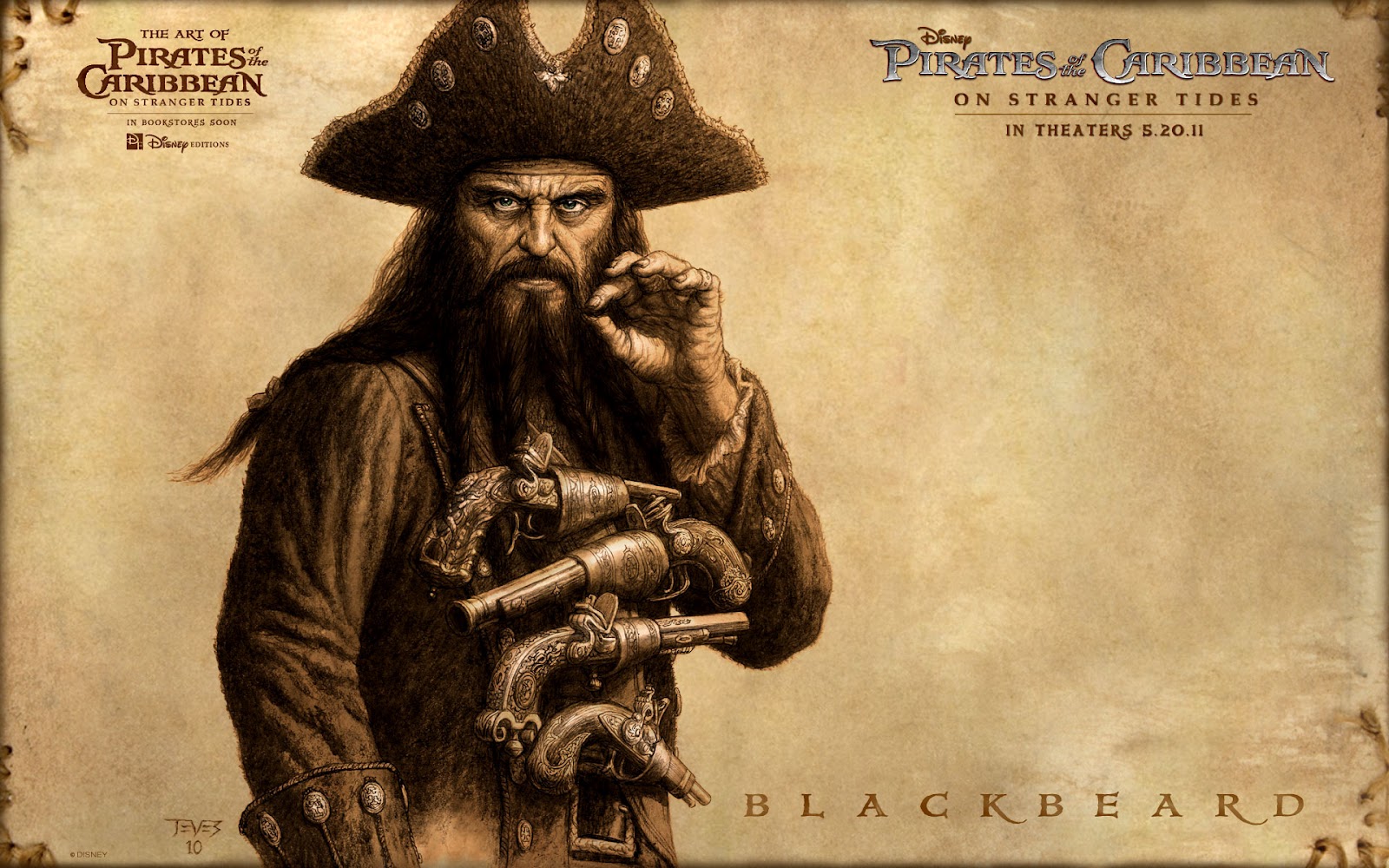
Pirates of the Caribbean: On Stranger Tides


 The Pirates of the Caribbean: On Stranger Tides (3.5/5)

The original Pirates of the Caribbean had the element of surprise on its side.  No one suspected that a film based on an antiquated attraction at Disney World would foster much entertainment value, and certainly no one thought it would become such a cultural juggernaut that it would spawn three sequels and catapult Johnny Depp to the top of the Hollywood A-list food chain, making him an international star.  I had been a Depp fan since childhood and had enjoyed his status as an idiosyncratic outsider, content to play dress up with his friends, and when I first saw a preview for Pirates of the Caribbean, I must admit that my eyes rolled and asked myself, what the hell is Depp thinking?  And then the movie came out.  Not only was the film filled with clever conceits, thanks in part to a screenplay that felt like the intricate work of an old fashioned clockmaker, but Depp turned in a surprisingly rousing performance as the effete, possibly insane pirate, Jack Sparrow.  Here was a multi-million dollar film and in the center stood a character fueled by pure id, stabbing other characters in the back in a moments notice while never letting the audience in on whether he does so out of a sense of self preservation or as part of a grander, more heroic scheme.  If there is a Falstaff for the 21st century, then his name is Jack Sparrow.

And then the sequels happened.  Weighted down by their ever expanding mythology, Dead Man’s Chest and At World’s End limped through their expanding running time while dragging along enough subplots for at least five more films.  At the beginning of the first film we are concerned with Depp’s attempts to reclaim his ship and the romance between Will and Elizabeth, but by the end of the third movie a major plot point pivoted around the unrequited love of Calypso, a tertiary character who would have been mostly forgettable if she weren’t played by the immensely talented Naomie Harris.  Where The Curse of the Black Pearl’s tight plotting and clearly established supernatural rules made it seem shorter than its two hours and fifteen minutes, the two sequels felt much, much longer than their already bloated running times.  I understand that the filmmakers were trying to give us a bang for our buck, but they also needed to learn how to leave the audience wanting more.

It is with these widely held critiques in mind that the filmmakers went into the fourth Pirates movie, On Stranger Tides.  And there are several elements that tell us that the movie is attempting to swing all the way back around to the original film in hopes of bottling a little of the magic that made the first film a runaway success.  First, Will and Elizabeth have been jettisoned from the film.  This is good news because these two characters seemed unnecessary in the last two movies, and it increasingly felt as if the actors had merely wandered onto the set because they had nowhere else to go.  Second, the film is only tenuously connected to the byzantine mythology of the last few films.  Sure, characters like Captain Barbossa show up, but it is not necessary to be intimately familiar with the details of his curse, death and resurrection from the other three films.  Both of these choices allow the film to focus on what really matters: the character of Jack Sparrow.


So, does the film actually accomplish what it set out to do?  Is On Stranger Tides a return to form?  In a word, no.  But that doesn’t mean that it’s not a good time, and the film bodes well for the inevitable sequels coming our way.  Plenty of film critics have taken On Stranger Tides to task for not living up to the promises of the first film, and while their complaints are not without merit, I strongly believe the movie largely delivers. 

On Stranger Tides follows multiple entities as they each lie, steal and cheat in order to make their way to the elusive Fountain of Youth, first discovered and then re-lost by Ponce De Leon nearly two centuries previous.  The entries into this mad, mad chase are the Spanish government, a coldly calculating participant, the British government, lead by former pirate Barbossa, the cutthroat Blackbeard, and of course Jack Sparrow himself.  After a rousing opening escape from the clutches of the British, Jack finds himself tracking down rumors of another Jack Sparrow who’s gathering a crew in London.  The Jack Sparrow impersonator happens to be an old flame, Angelica, in costume, a play on Jack’s effeminate mannerisms as well as the plethora of Jack Sparrow wannabes that walk the street on Halloween.  A nun who broke her vow of chastity to Jack, Angelica doesn’t quite trust the pirate, but she needs the map to the Fountain of Youth, which happens to be in Jack Sparrow’s possession. 

Of course, there are a plethora of double and triple crosses that occur throughout the film.  Like a good magician, the film does a lot with just a little slight of hand.  Angelica can not exactly be trusted (or can she?), and Jack winds up in the forced servitude of the pirate Blackbeard, played with suave menace by Ian McShane.  Concerned about a prophecy about his impending death, Blackbeard is also searching out the Fountain of Youth, but in order to actually use the fountain, he must procure a tear drop from a mermaid.  In the world of the Pirates movies, mermaids are vicious creatures who put on a doe eyed veneer in order to, like the sirens, lure men to their death.  The mermaid segment is particularly well executed.  The director, Rob Marshall, uses beautiful underwater shots of the small boats that have gone out to lure the mermaids, while ratcheting up the tension.  We know from the reactions of the sailors that the mermaids are dangerous and they could strike at any moment, creating an air pregnant with tension. 
 
With the inclusion of the mermaids, however, comes one of the film’s failings, an unnecessary subplot that often tries the audience’s patience.  A young missionary character who has been captured by Blackbeard is dropped like a cannonball into the middle of the film for no particular reason.  We are told who he is thanks to some leaden exposition by Angelica, and when they do finally capture a mermaid, her and the missionary start making googly eyes at one another.  The mermaid and the missionary seem like they’re replacements for Will and Elizabeth, but unlike those two characters the audience has little investment in this couple.  The movie has a few other flaws as well.  The filmmakers regularly break the show not tell rule.  Captain Barbossa, for example, explains to Jack about how he lost the ship, The Black Pearl, to Blackbeard, telling him that Blackbeard’s magic turned the ship against its own men, its ropes cutting down the Pearl’s crew.  While he told this story, I couldn’t help but think, that would have been cool to actually see, but thanks for sharing anyway Barbossa. 

But despite these flaws, On Stranger Tides is a film whose desire to please is evident.  All the main actors do a fantastic job, even if McShane is elbowed out of much of the film by some unnecessary subplots.  There are also some great twists throughout the movie.  I won’t spoil them for you here, but let us just say that not everyone is searching for the Fountain of Youth for eternal life.  So even when the movie stumbles, it still entertains.  On Stranger Tides is not the return to form it so desperately wants to be, but it is a nice indicator that if we are going to get at least two more of these Pirates movies, then at the very least they will serve as good summer diversions. 

Sunday, February 12, 2012

Violent Femmes - Hallowed Ground


Violent Femmes – Hallowed Ground (5/5)

There are few bands who have released debut albums as fully formed as the Violent Femmes’s eponymous release.  In the decades since its first appearance in 1983, Violent Femmes has become somewhat iconic, and the album seems to constantly spawn a new life for itself with each new generation of listeners thanks to the way in which it delves into seemingly universal themes of alienation, anxiety, and frustration (or at least universal to every wave of American teenagers from the 1950s onward).  And while it is possible to place the Violent Femmes’s sound within a historical context, mostly as a precursor to “alternative” music along with their peers R.E.M., the unique arrangement of their influences, a strange mash up of punk, folk, and jazz, has confounded any potential imitators, making their original debut sound just as energetic and new today as it did nearly thirty years ago. 

In fact, the Femmes’s debut cast such a long shadow that each subsequent released couldn’t really escape it.  The conundrum of a successful first album can be heard in the Violent Femme’s second LP, Hallowed Ground.  For a second album, plenty of bands choose to make an inferior copy of the first, often by digging up some b-sides and calling it a day.  But for Hallowed Ground the Violent Femmes delved deep into their well of influences and offered up an album that, while clearly the work of the same three musicians, subsumes plenty of unexpected genres.  The Femmes delved into country, bluegrass and folk for some eerily Christian themed songs.  The lead singer, Gordan Gano, was raised by a devout Baptist minister, and he apparently held onto his faith despite the conflicted nature of Hallowed Ground’s songs.  The other two members of the Violent Femmes, Brian Ritchie and Victor DeLorenzo, were atheists at the time the group recorded Hallowed Ground, and at first were uncomfortable with the religious nature of the second album.  The album itself is tonally conflicted, not only swerving from one genre to another, but also swinging back and forth from religious condemnation to spiritual euphoria.

In the end, Ritchi and DeLorenzo had little to fear from this batch of songs.  This is not the music of a blindly following zealot, but of a man who feels disgust for religion even as he seemingly holds it firmly to his chest.  The first track off the album, “Country Death Song,” tells a Southern Gothic style narrative of a man who murders his entire family before hanging himself in his barn.  Told from the point of view of the husband and father, the protagonist whispers religious aphorisms to his daughters before plunging them down a well, telling them “Kiss your mother good night and remember that God saves” and later, “You know your papa loves you, good children go to heaven.”  The songs often touch upon bible-black topics like death, destruction and apocalypse, a subject that would have taken on new resonance during the cold war where potential nuclear destruction seemed to linger in everyone’s thoughts.  Tellingly, several songs, like “I Hear the Rain” and “It’s Gonna Rain,” invoke the story of Noah and the flooding of the earth.  But the centerpiece of the entire album must be the title track, which brings these themes of nuclear holocaust out from subtext.  The song begins with a spoken word invocation in the style of the King James Bible and plays with such atomic imagery as “Everyone's tryin’ to decide/where to go when there’s no place to hide/I follow the bombs as they’re coming down” and “Burn up the clouds block out the sun.”  A rising and falling piano melody leads us through the track, all the way to the end where it devolves into in a three way instrumental ruckus.  In fact several songs kick up a row in their later half, a strong disagreement between guitar, bass, and drums that perhaps signifies the conflicted nature of the album itself.

But there are also genuine gospel songs on the album, freed from any winking irony or tangled doubt.  And yet Hallowed Ground still feels like a Violent Femmes album through and through.  In part that’s because the songs are still written by the same three players who made their debut album such a classic and still include Gano’s recognizable bratty vocals and a one of the greatest series of bass lines in rock in roll.  In a sense Hallowed Ground allows us to reread the Violent Femmes’s eponymous album, forcing us to take a step back and reassess the psychosexual frustration that permeated those songs.  Instead of reading the first album as the ranting of a bored and randy kid, we might instead interpret those songs as the result of a teenager whose body was telling him something completely opposed to his upbringing.  And it is this difference between nature and religion that results in the dark night of the soul style questioning in Hallowed Ground.  Ultimately it’s because Gano’s religion is sufficiently suffused with doubt that no matter what your background, from agnostic to Episcopalian, there’s plenty in these songs that should resonate.  After all, no matter one’s ideological or religious grounding, if we do not struggle with at least some misgivings, then we have given ourselves up to someone else’s beliefs, not our own.